
Taxfiniti

#FinanceManagement

GST (Goods and Services Tax)

Goods and Services Tax (GST): A Complete Guide for Businesses in India
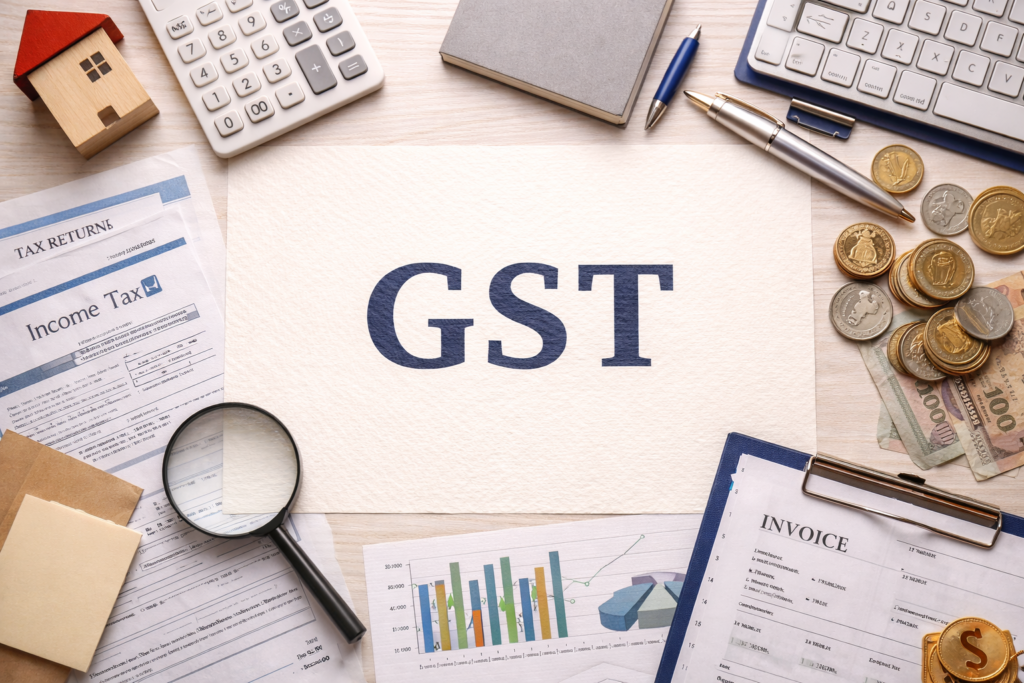
  Goods and Services Tax (GST) is one of the most significant tax reforms in India, designed to simplify the indirect taxation system by replacing multiple taxes with a single unified tax. Introduced on 1 July 2017, GST has streamlined the tax structure, improved compliance, and created a common national market. What is GST? GST is a destination-based indirect tax levied on the supply of goods and services. It is called “destination-based” because the tax is collected at the point of consumption rather than the point of origin. This ensures that the state where goods or services are consumed receives the tax revenue. GST replaced various indirect taxes such as VAT, service tax, excise duty, and central sales tax, thereby reducing the cascading effect of taxes (tax on tax). Legal Framework of GST GST in India is governed by several laws, the primary one being the Central Goods and Services Tax Act, 2017. Along with this, there are corresponding State GST Acts, Integrated GST (IGST) Act, and Union Territory GST Act. The implementation and administration of GST are overseen by the Goods and Services Tax Council, which includes representatives from the central and state governments. The council decides tax rates, rules, and policy changes. Types of GST GST in India is divided into four main types: CGST (Central GST): Collected by the central government on intra-state transactions SGST (State GST): Collected by the state government on intra-state transactions IGST (Integrated GST): Collected on inter-state transactions and imports UTGST (Union Territory GST): Applicable in union territories This dual structure ensures a fair distribution of tax revenue between central and state governments. GST Registration Businesses whose turnover exceeds the prescribed threshold must register under GST. The registration process is carried out online through the GST portal. Mandatory registration is required for: Businesses crossing the turnover limit Inter-state suppliers E-commerce operators Input service distributors Upon registration, businesses receive a unique GST Identification Number (GSTIN), which must be used in all tax-related transactions. GST Rates Structure GST follows a multi-rate structure to accommodate different categories of goods and services: 0% (Exempted goods/services) 5% (Essential items) 12% and 18% (Standard rates) 28% (Luxury and sin goods) This classification ensures that essential goods are taxed at lower rates, while luxury items attract higher taxes. Input Tax Credit (ITC) One of the most important features of GST is the Input Tax Credit mechanism. ITC allows businesses to claim credit for the tax paid on inputs used in the production or supply of goods and services. For example, if a manufacturer pays GST on raw materials, they can deduct that amount from the GST payable on the final product. This eliminates the cascading effect of taxes and reduces the overall tax burden. GST Returns and Compliance Registered taxpayers must file periodic GST returns, which include details of sales, purchases, tax collected, and tax paid. Common returns include: GSTR-1 (Outward supplies) GSTR-3B (Monthly summary return) Annual return Timely filing of returns is essential to avoid penalties and ensure smooth business operations. Benefits of GST GST has brought several advantages to the Indian economy: Simplified Tax Structure: Replaced multiple indirect taxes with a single system Elimination of Cascading Effect: Reduced double taxation Ease of Doing Business: Simplified compliance through online systems Uniform Tax Rates: Created a common market across states Increased Transparency: Improved tax compliance and reduced evasion GST has also encouraged digitization and formalization of the economy. Challenges under GST Despite its benefits, GST has faced certain challenges: Complex compliance for small businesses Frequent changes in rules and rates Technical issues with the GST portal Working capital blockage due to delayed ITC refunds The government continues to address these issues through policy updates and system improvements. GST for Small Businesses To support small businesses, the government introduced the Composition Scheme. Under this scheme, eligible businesses can pay GST at a lower fixed rate and file simplified returns. However, they cannot claim input tax credit. This scheme reduces the compliance burden for small taxpayers and encourages voluntary registration. GST and Digital Economy GST has significantly contributed to the digital transformation of India’s tax system. The entire process—from registration to return filing—is conducted online. This has increased efficiency, reduced corruption, and improved record-keeping. E-invoicing and e-way bills are additional features that enhance transparency and tracking of goods movement. Importance of GST for Businesses GST plays a crucial role in business operations: Ensures legal compliance Improves supply chain efficiency Reduces tax costs through ITC Enhances credibility with customers and vendors Facilitates expansion across states Understanding GST is essential for businesses to remain competitive and compliant. Conclusion GST has revolutionized the indirect tax system in India by creating a unified, transparent, and efficient tax structure. While challenges remain, continuous reforms and technological advancements are making GST more business-friendly. For entrepreneurs, professionals, and businesses, staying updated with GST laws and compliance requirements is essential. A well-managed GST system not only ensures legal compliance but also contributes to long-term business growth and sustainability.  

Goods and Services Tax (GST): A Complete Guide for Businesses in India Read More »

GST in India: Complete Guide to Goods and Services Tax, Compliance & Benefits
GST in India: Complete Guide to Goods and Services Tax, Compliance & Benefits

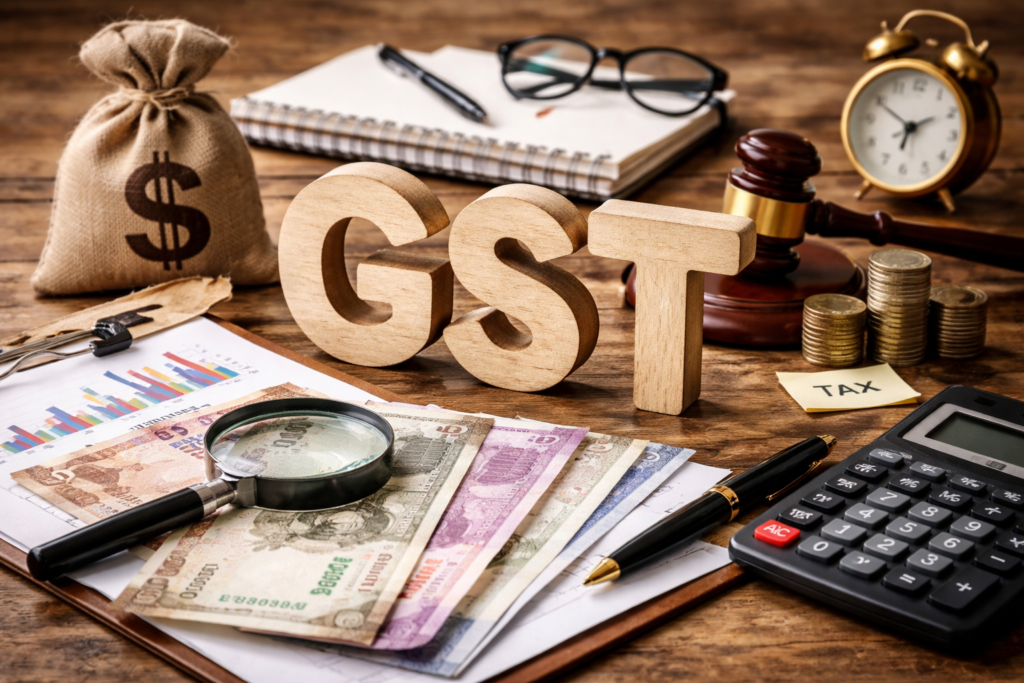
  Goods and Services Tax (GST) is one of the most significant tax reforms in India, introduced to simplify the indirect taxation system and create a unified national market. Implemented on July 1, 2017, GST replaced multiple indirect taxes such as VAT, service tax, excise duty, and others, bringing them under a single tax structure. It aims to make taxation transparent, efficient, and business-friendly. What is GST? GST is a comprehensive, multi-stage, destination-based indirect tax levied on the supply of goods and services. It is collected at every stage of the supply chain but ultimately borne by the final consumer. Under GST, businesses can claim input tax credit (ITC) on taxes paid on purchases, which reduces the overall tax burden and eliminates the cascading effect of taxes. Types of GST in India GST in India is divided into four main types: 1. CGST (Central GST) Collected by the Central Government on intra-state transactions. 2. SGST (State GST) Collected by the State Government on intra-state transactions. 3. IGST (Integrated GST) Collected by the Central Government on inter-state transactions and imports. 4. UTGST (Union Territory GST) Applicable in Union Territories without a legislature. This dual GST model ensures proper distribution of tax revenue between the central and state governments. Key Features of GST GST has transformed the taxation system with several important features: One nation, one tax system Elimination of cascading taxes Online compliance and digital filing Input Tax Credit mechanism Transparency in taxation Wider tax base These features make GST more efficient compared to the earlier tax system. GST Registration GST registration is mandatory for businesses whose turnover exceeds the prescribed threshold limit (generally ₹40 lakh for goods and ₹20 lakh for services, subject to changes and exceptions). Businesses required to register include: E-commerce sellers Interstate suppliers Casual taxable persons Input service distributors The registration process is online through the GST portal and requires documents such as PAN, Aadhaar, bank details, and business proof. GSTIN (GST Identification Number) After registration, businesses receive a unique GSTIN, which is used for all GST-related transactions. It is a 15-digit number that helps track tax payments and compliance. Input Tax Credit (ITC) Input Tax Credit is one of the most important aspects of GST. It allows businesses to reduce the tax they have already paid on purchases from their total tax liability. For example, if a business pays GST on raw materials, it can deduct that amount from the GST payable on the final product. Conditions to claim ITC: Possession of a valid tax invoice Goods or services received Supplier has paid the tax GST returns filed GST Returns Filing GST requires businesses to file periodic returns to report their sales, purchases, and tax liability. Common types of returns include: GSTR-1 (outward supplies) GSTR-3B (summary return) GSTR-9 (annual return) Timely filing of returns is essential to avoid penalties and maintain compliance. GST Rates in India GST is levied at different rate slabs depending on the type of goods and services: 0% (essential goods) 5% (basic necessities) 12% and 18% (standard goods/services) 28% (luxury items) The GST Council regularly reviews and updates these rates. Composition Scheme The composition scheme is designed for small taxpayers to reduce compliance burden. Under this scheme: Businesses pay tax at a fixed rate No need to maintain detailed records Limited compliance requirements However, businesses under this scheme cannot claim input tax credit and cannot make interstate supplies. Advantages of GST GST offers numerous benefits to businesses and the economy: Simplified tax structure Reduced tax burden Increased compliance and transparency Boost to ease of doing business Elimination of multiple taxes Improved logistics and supply chain It has also helped in reducing tax evasion through digital tracking. Challenges under GST Despite its advantages, GST has certain challenges: Complex compliance for small businesses Frequent changes in rules and rates Technical issues with the GST portal Understanding ITC rules High penalties for non-compliance Continuous updates and professional guidance are often required. GST and E-Commerce GST has specific provisions for e-commerce businesses: Mandatory registration regardless of turnover Tax collection at source (TCS) by e-commerce operators Detailed reporting requirements These provisions ensure transparency and accountability in online transactions. Penalties under GST Non-compliance with GST laws can lead to penalties such as: Late filing fees Interest on delayed tax payments Cancellation of GST registration Legal action in severe cases Businesses must ensure timely compliance to avoid these consequences. Role of GST Council The GST Council is the governing body responsible for making decisions related to GST. It includes representatives from the central and state governments. Its functions include: Setting tax rates Making policy decisions Resolving disputes Improving GST framework Future of GST in India GST continues to evolve with reforms aimed at simplifying compliance and improving efficiency. The government is working on: Simplified return filing Improved digital infrastructure Expansion of tax base Integration with e-invoicing systems These developments are expected to make GST more user-friendly and efficient. Conclusion GST has revolutionized the Indian taxation system by creating a unified and transparent tax structure. It has simplified compliance, reduced tax burden, and boosted economic growth. For businesses, understanding GST laws, maintaining proper records, and ensuring timely compliance is essential for smooth operations. With the right knowledge and professional guidance, GST can be effectively managed, helping businesses grow in a competitive market.  

GST in India: Complete Guide to Goods and Services Tax, Compliance & Benefits Read More »

Accounting for Businesses in India: A Complete Guide to Financial Management

Accounting for Businesses in India

Accounting for Businesses in India: A Complete Guide to Financial Management Accounting is the backbone of every successful business. Whether it is a startup, small enterprise, or large corporation, proper accounting helps organizations maintain financial transparency, comply with legal regulations, and make informed business decisions. In India’s rapidly growing economy, businesses must maintain accurate financial records to ensure compliance with tax laws and regulatory requirements. A strong accounting system enables companies to track income, manage expenses, analyze profitability, and plan for sustainable growth. Accounting is not just about recording transactions; it is about understanding the financial health of a business. With regulations such as the Companies Act, 2013 and the Goods and Services Tax (GST), businesses are required to maintain proper books of accounts and follow financial reporting standards. Effective accounting practices ensure compliance while helping entrepreneurs manage their resources efficiently. What is Business Accounting? Business accounting refers to the systematic process of recording, classifying, summarizing, and analyzing financial transactions. It provides an accurate picture of the company’s financial performance and position. Accounting helps businesses track revenue, expenses, assets, liabilities, and equity. By maintaining structured financial records, companies can prepare important financial statements such as balance sheets, income statements, and cash flow statements. These reports allow business owners and stakeholders to evaluate financial performance and make strategic decisions. In India, accounting standards are regulated by the Institute of Chartered Accountants of India, which establishes guidelines for financial reporting and auditing practices. Importance of Accounting for Businesses Accounting plays a vital role in the success and sustainability of a business. Without accurate financial records, companies may struggle to track profitability or comply with tax obligations. 1. Financial Transparency Proper accounting ensures transparency in financial transactions. Businesses can maintain clear records of revenue and expenses, which helps build trust with investors, partners, and regulatory authorities. 2. Legal Compliance Businesses in India must comply with various tax and regulatory requirements. Maintaining accurate accounting records helps ensure compliance with GST, income tax, and corporate laws. 3. Better Decision-Making Financial reports provide valuable insights into the company’s financial performance. Business owners can analyze profits, identify cost-saving opportunities, and make informed decisions. 4. Budgeting and Financial Planning Accounting data helps companies create budgets, forecast revenue, and allocate resources effectively. This ensures long-term financial stability. 5. Investor and Loan Support Investors and financial institutions often require detailed financial records before providing funding. Well-maintained accounts improve a company’s credibility and increase the chances of securing investment or loans. Key Components of Business Accounting To maintain an effective accounting system, businesses must focus on several essential components. 1. Bookkeeping Bookkeeping is the foundation of accounting. It involves recording daily financial transactions such as sales, purchases, receipts, and payments. Accurate bookkeeping ensures reliable financial data for analysis and reporting. 2. Financial Statements Financial statements provide a comprehensive overview of the company’s financial position. The main financial statements include: Balance Sheet – Shows the company’s assets, liabilities, and equity. Profit and Loss Statement – Displays revenue, expenses, and net profit or loss. Cash Flow Statement – Tracks cash inflows and outflows. These statements help stakeholders understand the financial health of the business. 3. Tax Accounting Tax accounting focuses on managing tax-related obligations, including GST filings, income tax returns, and compliance with government regulations. 4. Payroll Accounting Payroll accounting involves managing employee salaries, tax deductions, bonuses, and statutory contributions such as provident fund and professional tax. 5. Financial Analysis Financial analysis helps businesses evaluate profitability, efficiency, and liquidity. It involves reviewing financial statements to identify trends and opportunities for improvement. Accounting Methods Used by Businesses Businesses generally follow one of two main accounting methods: 1. Cash Accounting Under the cash accounting method, transactions are recorded when cash is received or paid. This method is commonly used by small businesses and startups because it is simple and easy to maintain. 2. Accrual Accounting The accrual method records transactions when they occur, regardless of when the payment is made. This approach provides a more accurate view of financial performance and is commonly used by larger companies. Accounting Software and Digital Transformation With advancements in technology, many businesses in India now use accounting software to manage their finances. Digital accounting tools simplify bookkeeping, automate calculations, and generate financial reports in real time. Accounting software helps businesses: Maintain accurate financial records Automate tax calculations Generate invoices and financial reports Track expenses and revenue Improve financial efficiency Digital accounting also reduces manual errors and allows businesses to maintain secure and accessible financial data. Challenges in Business Accounting Despite its importance, many businesses face challenges in maintaining proper accounting systems. Common issues include: Lack of accounting knowledge among entrepreneurs Poor record-keeping practices Delayed tax filings Inaccurate financial reporting Failure to comply with regulatory requirements These challenges can lead to financial mismanagement and legal complications. Therefore, businesses must prioritize proper accounting practices from the beginning. Benefits of Professional Accounting Services Many companies choose to hire professional accountants or accounting firms to manage their financial records. Professional accounting services provide several advantages: Accurate bookkeeping and financial reporting Compliance with tax laws and regulations Expert financial advice and planning Reduced risk of errors and penalties Efficient management of payroll and tax filings Professional accountants help businesses focus on growth while ensuring that financial records remain accurate and compliant. Best Practices for Effective Financial Management To maintain strong financial management, businesses should follow these best practices: Maintain accurate and updated financial records. Separate personal and business finances. Use reliable accounting software. Review financial statements regularly. Ensure timely tax filings and compliance. Consult professional accountants for financial planning. Implementing these practices helps businesses maintain financial discipline and avoid potential legal or financial issues. Conclusion Accounting is a critical element of successful business management in India. It provides a structured framework for recording financial transactions, ensuring legal compliance, and analyzing business performance. By maintaining accurate accounting records, businesses can improve financial transparency, make informed decisions, and achieve sustainable growth. Whether you are a startup founder, small business owner, or corporate manager, investing in

Accounting for Businesses in India Read More »